

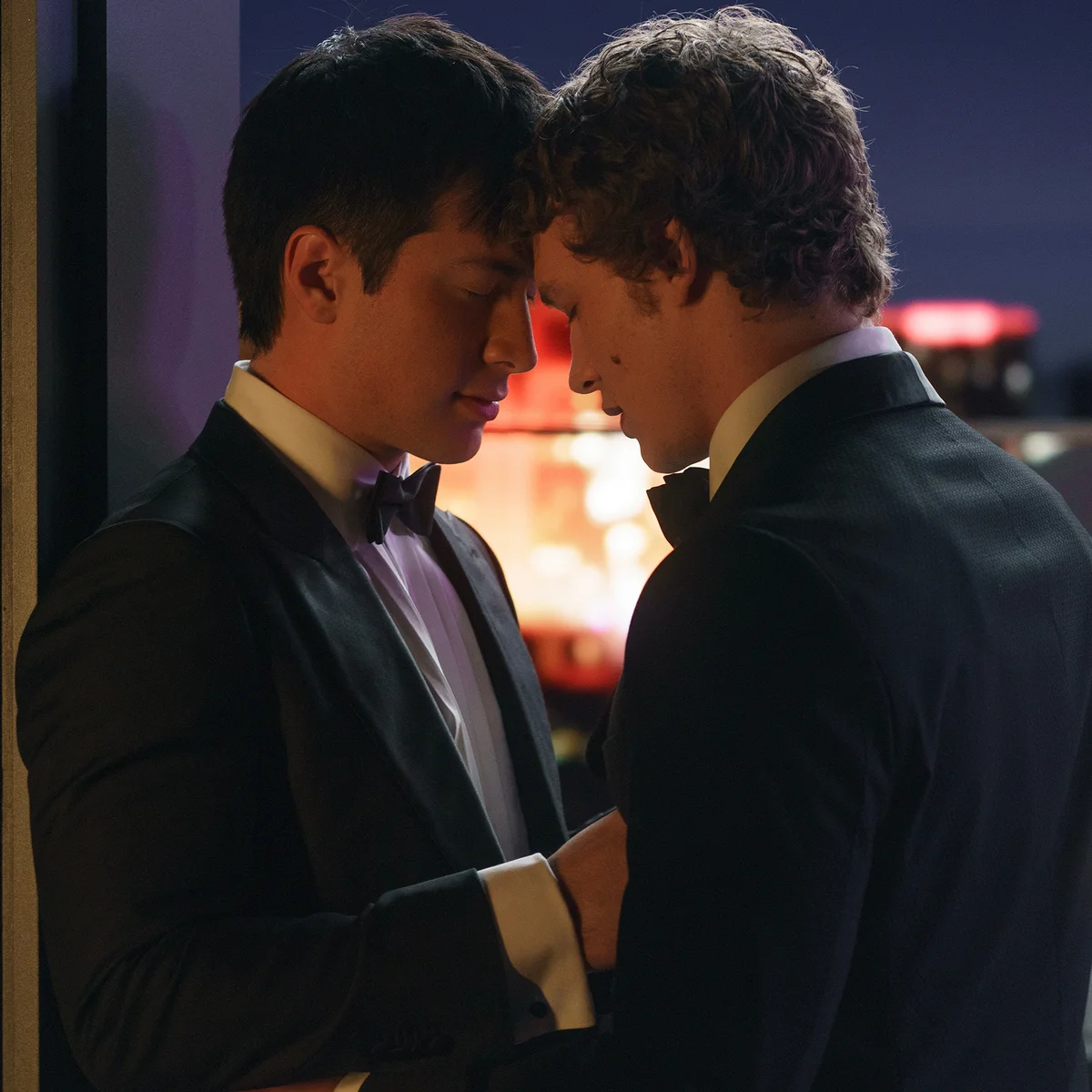
Early in Heated Rivalry, there’s a moment that quietly sets the tone for everything that follows. Shane Hollander and Ilya Rozanov—elite hockey prospects from Canada and Russia—have just crossed a line neither of them is supposed to acknowledge. Sitting on the edge of a hotel bed, Hollander breaks the silence with a nervous question: no one is going to hear about this, right? Rozanov’s sarcastic reply barely masks the reality they both understand. What matters isn’t what happened, but that it stays hidden. The rule is simple and unspoken: no one can know.
That single line feels less like a personal request and more like a mission statement for the sport itself. If ice hockey had an unofficial motto, “no one can know” might be it. “No One Can Know”: How Heated Rivalry Reveals Ice Hockey’s Culture of Silence Through Queer Love captures how the breakout 2025 series from Crave and HBO goes beyond a romance storyline to confront something deeper—hockey’s long-standing habit of burying difference, especially when it comes to sexuality.
At its core, Heated Rivalry explores a contradiction that defines modern hockey. On the surface, the sport insists it is welcoming and progressive. The NHL’s 2017 “Hockey Is For Everyone” campaign was framed as an open invitation to fans and players from communities historically excluded from the game, including LGBTQ+ people. League commissioner Gary Bettman later emphasized that diversity fuels creativity, performance, and growth, presenting inclusion as both a moral and business imperative.
Yet those promises have felt increasingly fragile. The NHL’s 2022 diversity and inclusion report briefly signaled accountability, only to quietly disappear from the league’s website. Since then, no follow-up report has emerged. The message, intentional or not, was clear: inclusion mattered—until it became uncomfortable.
That discomfort surfaced publicly in early 2023 when Philadelphia Flyers defenseman Ivan Provorov declined to wear a Pride-themed warm-up jersey, citing religious beliefs. Other players soon followed suit. Rather than enforcing the jerseys as standard team apparel, the NHL eliminated them altogether. Bettman later explained that the issue had become a “distraction” from the spirit of Pride nights. In hockey, being labeled a distraction is one of the worst things you can be.
Former You Can Play board co-chair Cheryl MacDonald has described how deeply that fear runs. In interviews with gay hockey players, she found that silence wasn’t about shame so much as survival. Anything that set a player apart—sexuality, mental health struggles, even injury—was seen as a risk to their career. Why speak up when someone just as talented, and less complicated, could easily take your place? Saying nothing often feels safer.
Heated Rivalry dramatizes this tension with sharp clarity. In one of the series’ final episodes, another player publicly celebrates a championship win by kissing his boyfriend on the ice. It’s a moment of visibility that feels almost radical in its simplicity. The crowd appears stunned, then delighted. The announcer offers a neutral observation: “You don’t see that every day.” Exactly—and that’s the point.
Real-life research suggests the reaction might not be as dire as many players fear. MacDonald’s study found that when gay players did come out, teammates were largely supportive. Locker-room language softened. Even humor adapted, becoming more respectful rather than hostile. The culture didn’t collapse; it adjusted. The silence, not the truth, had been the real burden.

As Heated Rivalry continues to draw viewers, there’s been plenty of chatter about whether the show could bring new audiences to hockey. But queer fans and players aren’t newcomers—they’ve always been part of the game, watching from the stands, supporting teams, lacing up skates, and learning early which parts of themselves should stay hidden.
The NHL, for its part, has responded with polite enthusiasm, calling the show a “unique driver” for fan engagement. It’s an upbeat soundbite, but an empty one. Even when the conversation is unavoidable, the league struggles to say anything meaningful. Once again, queerness is framed as a side issue, not a reality woven into the sport.
Heated Rivalry doesn’t just tell a love story; it exposes a system built on quiet compliance. It asks what hockey might look like if “no one can know” stopped being the rule—and what could finally change if knowing, and being seen, were no longer treated as distractions.