

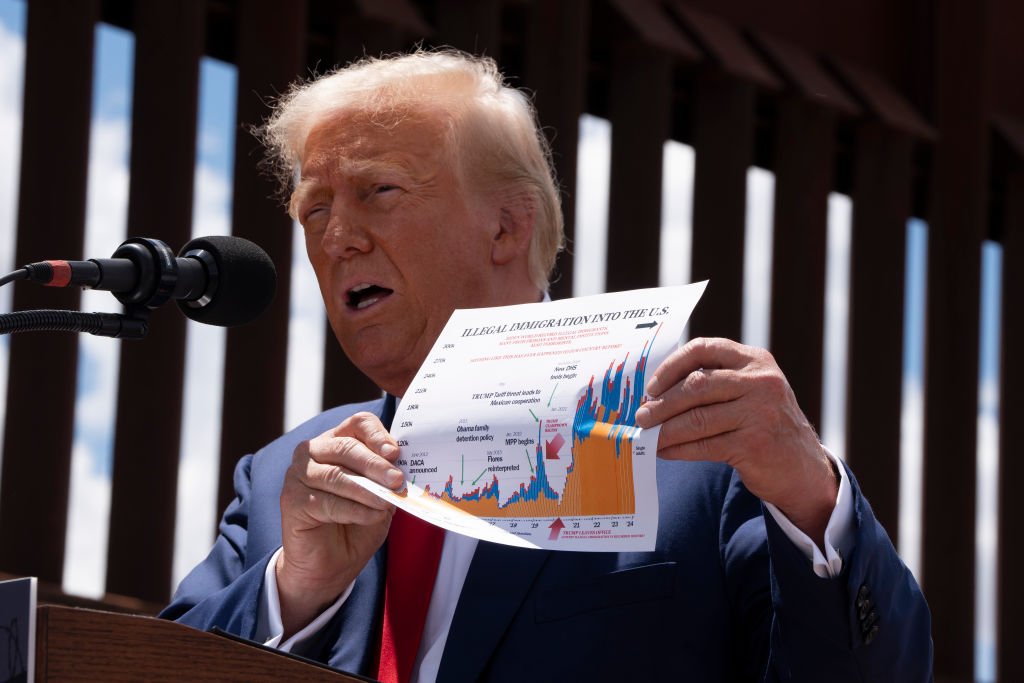
When Donald Trump released his National Security Strategy, it marked a sharp break from the approaches favored by many recent U.S. administrations. To critics and supporters alike, the doctrine immediately raised a provocative question: Is Trump Bringing Back the Monroe Doctrine? While the comparison is not perfect, the parallels are difficult to ignore.
From James Monroe to “America First”
Nearly two centuries ago, America’s fifth president, James Monroe, articulated a policy designed to keep European powers out of the Western Hemisphere. The original Monroe Doctrine was defensive at its core, rooted in the idea that the Americas should remain free from foreign interference while the United States avoided entanglements abroad.
Trump’s version expands that concept dramatically. Rather than simply warning off distant empires, his “America First” agenda seeks to shield the United States from a wide array of modern threats—ranging from authoritarian influence to transnational crime—emanating both from overseas rivals and from instability closer to home.
Securing the Hemisphere From External and Internal Threats
At the heart of Trump’s strategy is the belief that democracy and security in the Western Hemisphere are inseparable from U.S. stability. His administration has emphasized border enforcement, faster deportation processes, and tougher measures against individuals and networks that violate American law.
At the same time, Washington has intensified cooperation with regional partners to dismantle arms, drug, and human-trafficking cartels that destabilize entire nations. According to U.S. officials, these criminal networks often benefit from indirect backing or tolerance by global adversaries such as China, Iran, and Russia, whose influence increasingly stretches into Latin America.
Cooperation With Mexico and the Fight Against Cartels
One of the most notable shifts has been closer collaboration with Mexico’s leadership. The Trump administration has praised Mexican President Claudia Sheinbaum and her security team, including Omar García Harfuch, for taking firmer action against organized crime. Despite the immense danger involved—Harfuch himself survived a major assassination attempt—Mexican authorities have expanded intelligence sharing and enforcement efforts.
While dismantling powerful cartels will take years, public backlash against their violence is growing, and coordinated pressure is beginning to yield tangible results.
Economic Pressure and the Battle Against Fentanyl
Trade policy has become another lever in Trump’s hemispheric strategy. Tariffs and diplomatic pressure are being used to push China to curb the export of fentanyl precursor chemicals flowing into Mexico. A “trust but verify” approach underpins these efforts, as U.S. forces simultaneously intercept drug shipments from countries such as Bolivia, Colombia, and Venezuela.
These actions underscore how Trump’s doctrine blends economics with security, treating trade not just as commerce but as a tool of national defense.
The Fall of Nicolás Maduro and a Regional Warning
Perhaps the most dramatic episode came with the capture of former Venezuelan leader Nicolás Maduro in a meticulously planned operation involving U.S. law enforcement, intelligence agencies, and the military. Sustained naval and Coast Guard pressure reportedly limited Maduro’s escape options, while seizures of drug vessels and oil tankers weakened his regime.
His removal sent a stark signal—not only to other authoritarian leaders in the region, but also to global powers seeking footholds in the Americas—that Washington is willing to act decisively.
Pushing Back Against Beijing’s Expanding Reach
A key pillar of Trump’s approach is countering the influence of the Chinese Communist Party through initiatives like the Belt and Road Initiative. The administration has moved to restrict Chinese involvement in ports, infrastructure projects, and surveillance systems across Latin America.
Special attention has been paid to safeguarding strategic assets such as the Panama Canal, limiting land purchases near U.S. military bases, and curbing propaganda efforts aimed at American institutions.
A Changing Political Landscape in Latin America
Recent elections across countries including Argentina, Ecuador, El Salvador, Peru, and Paraguay have brought more conservative-leaning governments to power. These leaders are seen as potential partners in combating crime, strengthening democratic norms, and resisting socialist or communist influence in the region.
Their cooperation could prove essential in reinforcing a hemispheric order more aligned with U.S. interests.
Peace Through Strength and Global Resolve
Military power remains a cornerstone of what supporters now call the Trump Doctrine. By rebuilding U.S. armed forces and embracing a “peace through strength” philosophy, the administration has aimed to deter adversaries before conflicts escalate. Precision strikes in hotspots such as Syria and Yemen, along with direct action against Iran’s nuclear infrastructure, illustrate Trump’s readiness to use force when diplomacy fails.
Beyond Monroe: A Broader Doctrine for a New Era
Ultimately, Is Trump Bringing Back the Monroe Doctrine? The answer is both yes and no. While the spirit of hemispheric protection echoes Monroe’s vision, Trump’s strategy is far broader—combining hard power, economic leverage, and selective diplomacy across multiple continents.
The guiding principle remains clear: the United States can support developing nations without engaging in endless nation-building, provided those countries take responsibility for their own stability. Nowhere will this test be more important than in post-Maduro Venezuela, where avoiding a power vacuum while restoring freedom and opportunity remains a daunting challenge.