

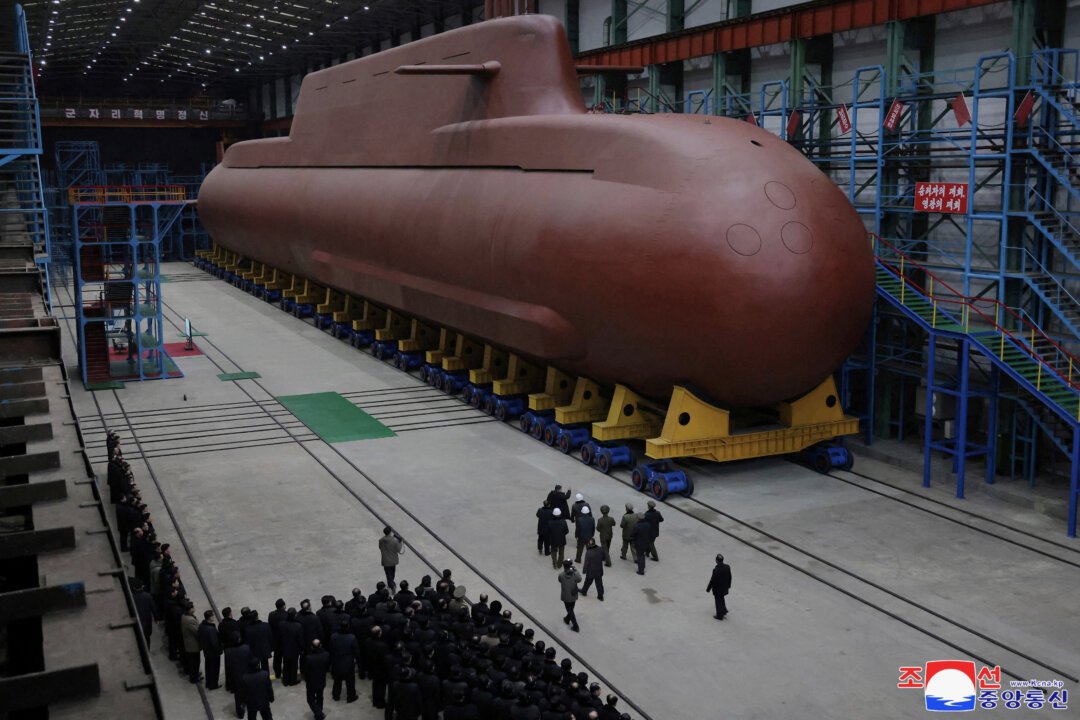
The near-completion of North Korea’s first nuclear-powered ballistic missile submarine marks a dangerous escalation in global security. Revealed as close to launch readiness in late December, the vessel—now widely discussed as North Korea’s Illicit Proxy Nuclear-Powered Submarine—is not only a direct threat to the United States and its regional allies, but also appears to sit at the center of a shadowy international struggle involving covert technology transfers and possible military intervention.
A Weapon Built in Defiance of International Law
North Korea’s nuclear submarine program stands in clear violation of international norms. More than 20 United Nations resolutions explicitly prohibit the sale, transfer, or assistance of nuclear- and missile-related technology to the regime. In parallel, the United States has imposed layers of sanctions through multiple executive orders and congressional acts designed to isolate Pyongyang’s weapons programs.
Taken together, these legal instruments form a strong basis for holding North Korean officials accountable—not only for maintaining this submarine, but also for sustaining an expansive nuclear arsenal. Equally important, they open the door to potential prosecution of foreign networks and state actors suspected of supplying nuclear reactors, missile components, or submarine technologies.
Foreign Assistance and a Suspicious Maritime Incident
While Chinese industrial designs have long influenced North Korea’s missile infrastructure—most notably its transporter-erector-launchers for mobile intercontinental ballistic missiles—there is growing speculation that Russia may have provided the nuclear propulsion system for this submarine.
That suspicion intensified after reports from the Spanish outlet La Verdad, which claimed that the Russian cargo ship Ursa Major, sunk off the coast of Spain in December 2024, was transporting two Soviet-era VM-4SG nuclear reactors allegedly bound for North Korea. These reactors were once used in Soviet Delta-class submarines, many of which have since been retired, leaving a surplus of usable nuclear power plants.
The report further suggested the vessel may have been destroyed by supercavitating torpedoes—advanced weapons possessed by only a handful of navies, including those of Russia, China, and Iran. If accurate, this points to a dramatic and covert effort by a submarine-capable state to halt nuclear proliferation before it reached Pyongyang.
Design Clues and Missile Capabilities
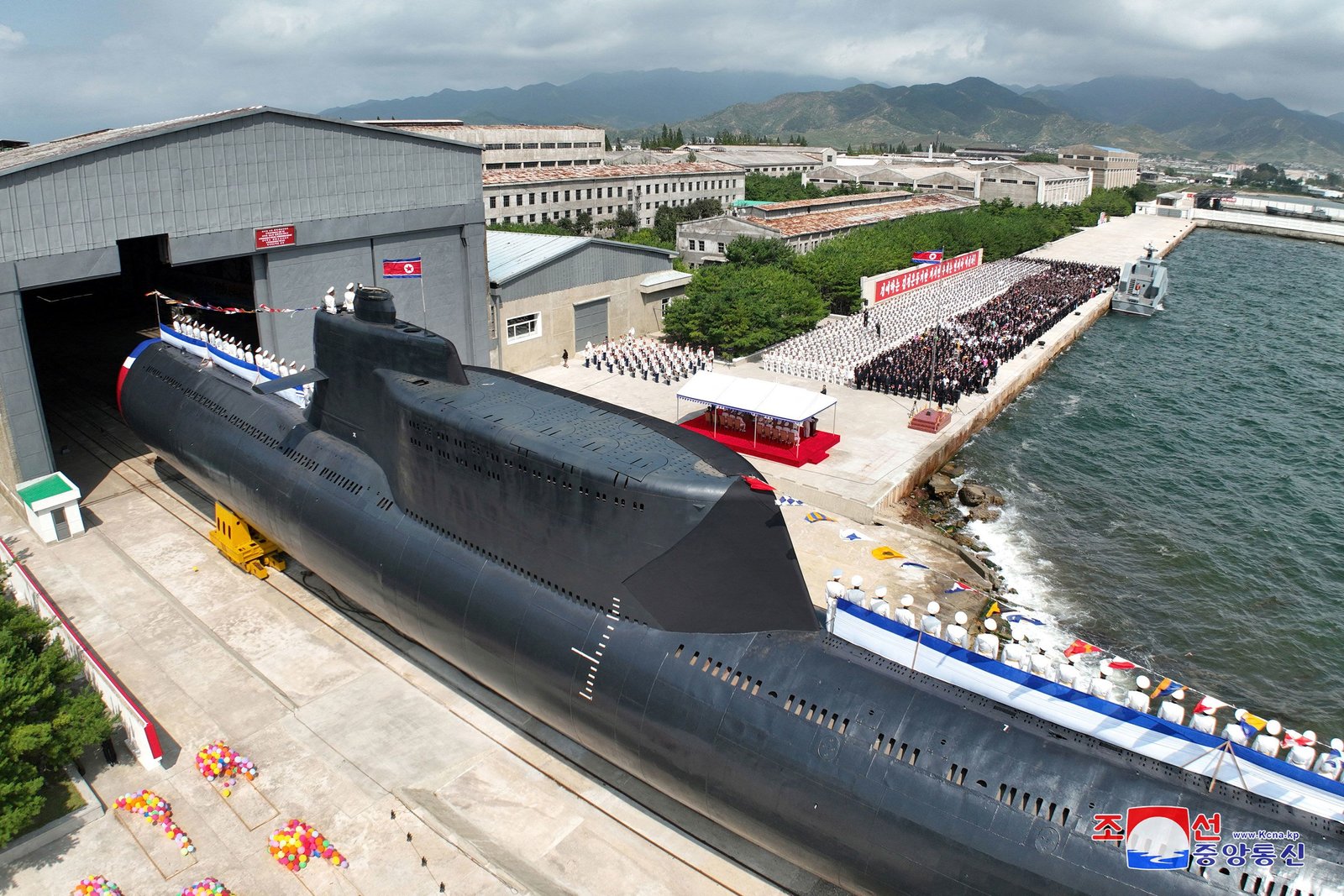
North Korean state media claims the submarine displaces roughly 8,700 tons—placing it in the same class as early Chinese and Soviet SSBNs. Yet its configuration is notably different. Instead of housing missiles aft of the sail, North Korea’s design features an enlarged sail structure that appears to contain multiple submarine-launched ballistic missiles (SLBMs).
This layout echoes older Soviet and Chinese designs, suggesting either shared engineering knowledge or deliberate stylistic obfuscation. Analysts estimate the sail could house up to ten SLBMs, possibly in two rows. The likely candidate missile is the Pukguksong-6, though the unusually long missile silos hint at something more ambitious: a new three-stage SLBM capable of striking targets across the continental United States.
If deployed from protected “bastions” near Chinese or Russian waters, such a submarine would dramatically complicate missile defense planning for the United States and its allies.
A Platform Designed to Hide—and to Spread
Further raising alarms are the submarine’s large flank sonar arrays, which suggest a focus on stealth and survivability. These features would be essential for evading South Korean, Japanese, and American anti-submarine forces.
Perhaps the most troubling implication, however, is export. North Korea has a history of selling missile and nuclear technology abroad, and a functional nuclear-powered submarine could become its most dangerous export yet. Potential buyers could include Pakistan—especially given its evolving security commitments in the Middle East—or other regimes seeking instant strategic leverage.
Legal and Strategic Consequences
The emergence of North Korea’s Illicit Proxy Nuclear-Powered Submarine forces a critical question: if this vessel ventures into international waters, do the United States, South Korea, or Japan possess not only the military capability, but also the legal authority, to neutralize it?
Given the submarine’s apparent violation of international law and its reliance on prohibited foreign assistance, the argument for preemptive action may already be forming. Whether that argument ever translates into action will shape the next chapter of deterrence, escalation, and risk in an increasingly unstable nuclear landscape—one now patrolled from beneath the sea by North Korea and its shadowy partners.