

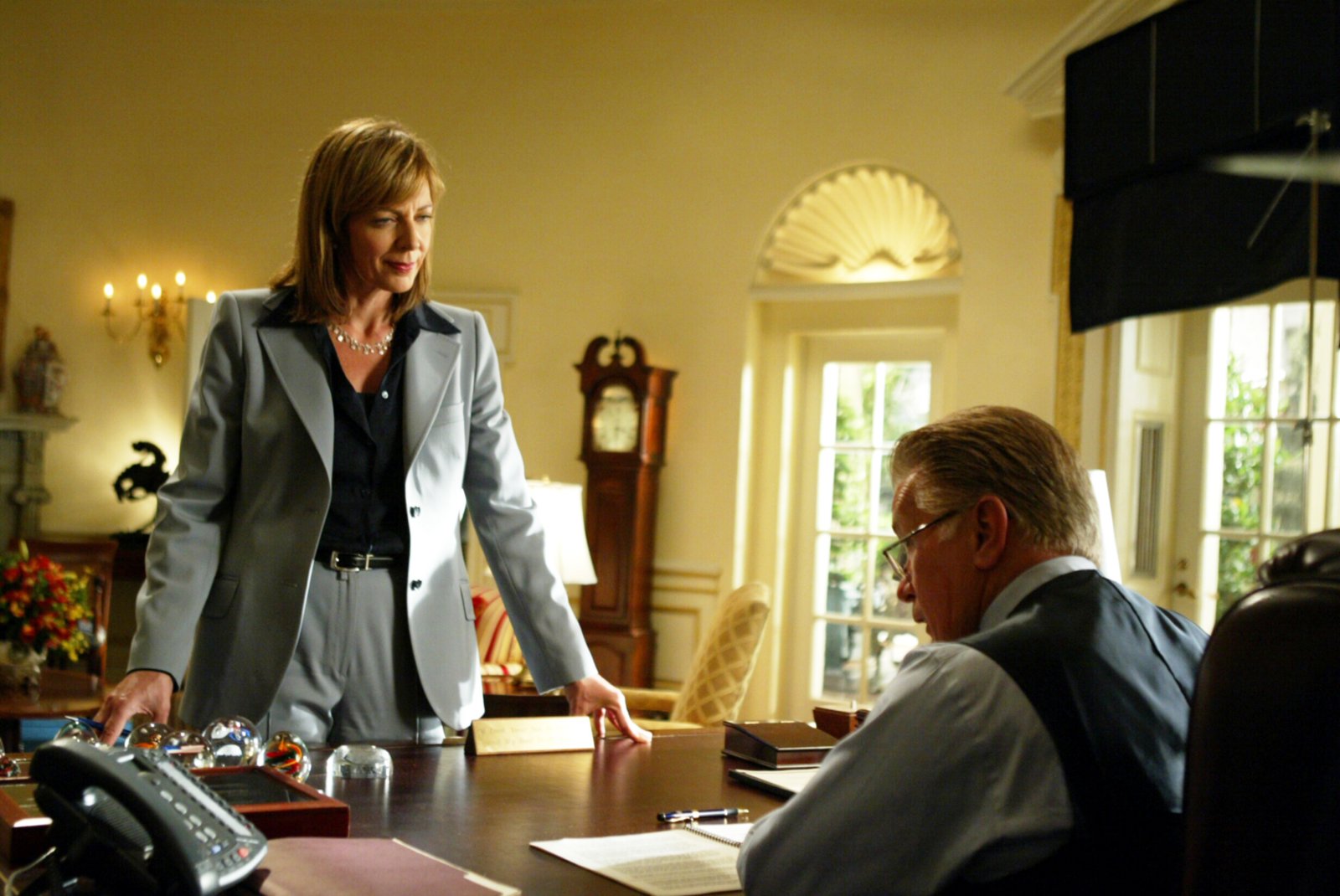
For many viewers, The West Wing lives in memory as a warm, hopeful portrait of American politics—a place where smart people spoke fast, ideals triumphed, and the right decision usually won out by the final act. But revisiting the series today reveals something far more complicated, and far more honest. The West Wing wasn’t as rosy as we recall; its cynicism was actually its greatest strength, and that quality is precisely why the show continues to resonate decades later.
Rather than offering blind optimism, the series quietly dismantled the fantasy of clean governance. Its brilliance lay in acknowledging that even good intentions are often compromised, delayed, or outright defeated by reality.
The Myth of Idealism vs. the Reality of Power
At first glance, The West Wing appears idealistic because it centers on people who genuinely want to do good. President Jed Bartlet and his senior staff are intelligent, ethical, and deeply invested in public service. Yet the show repeatedly underscores an uncomfortable truth: wanting to do the right thing is not the same as being able to do it.
Bills stall. Compromises dilute reform. Political optics override moral clarity. Time and again, characters are forced to choose between the least harmful option and the impossible ideal. This tension—between aspiration and outcome—is where the show’s subtle cynicism lives.
Cynicism Without Nihilism
What sets The West Wing apart from more overtly bleak political dramas is that its cynicism never slips into despair. The series does not argue that politics is pointless or that leaders are inherently corrupt. Instead, it suggests something more unsettling: that the system itself makes purity nearly impossible.
This perspective feels especially relevant today. Rather than presenting politics as a battlefield between good and evil, the show frames it as a maze of incentives, pressures, and trade-offs. That worldview may be sobering, but it is also deeply mature.
And once again, The West Wing wasn’t as rosy as we recall; its cynicism was actually its greatest strength—because it trusted viewers to handle complexity instead of comfort.
Heroes Who Lose—and Learn
Unlike traditional TV dramas, The West Wing allows its protagonists to fail publicly and often. Major legislative goals collapse. Supreme Court nominations backfire. Foreign policy decisions haunt the administration long after the headlines fade.
These failures are not narrative detours; they are the point. The show suggests that moral leadership is not defined by victory, but by persistence—by continuing to show up despite setbacks. In doing so, it dismantles the fantasy of the flawless political hero and replaces it with something more human.
Dialogue as a Weapon and a Shield
Aaron Sorkin’s famously rapid-fire dialogue often gets credited for the show’s charm, but it also serves a darker purpose. Words in The West Wing are tools—used to persuade, deflect, manipulate, and occasionally obscure uncomfortable truths.
Characters debate ethics endlessly, not because ethics are clear, but because they are slippery. A soaring monologue might inspire viewers, but it rarely changes the structural constraints facing the administration. The gap between eloquence and effectiveness becomes another quiet critique of power.
The Cost of Compromise
One of the show’s most cynical insights is also one of its most honest: compromise, while necessary, is rarely noble. Deals leave someone behind. Every win creates a loss elsewhere. The series repeatedly asks whether incremental progress is worth the moral erosion it requires.
Rather than answering that question definitively, The West Wing lets the discomfort linger. It acknowledges that governance is often about choosing which values to sacrifice—and living with the consequences.
Why This Cynicism Aged Better Than Optimism
In hindsight, the show’s refusal to fully indulge in optimism is what saved it from becoming outdated. Many political dramas tied to a specific era collapse once public faith erodes. The West Wing endures because it anticipated disillusionment without surrendering to it.
Its worldview aligns closely with how many people experience politics today: hopeful in theory, frustrating in practice. The show doesn’t promise redemption—it promises effort, intelligence, and moral wrestling, even when outcomes disappoint.
A Mirror, Not a Fantasy
Ultimately, The West Wing works best not as a utopian escape, but as a mirror. It reflects the contradictions of democracy: idealism colliding with ambition, ethics strained by urgency, and progress slowed by human limitation.
So when viewers say they miss the optimism of The West Wing, what they may actually miss is something rarer—a show that respected their intelligence enough to admit that democracy is hard, flawed, and frequently unsatisfying.
And that is why The West Wing wasn’t as rosy as we recall; its cynicism was actually its greatest strength—because it told the truth, even when the truth was uncomfortable.