

For decades, the music business has known exactly what a fan is supposed to do:
listen, buy, stream, share and show up. The strange experiment surrounding Ceno asks whether that definition is becoming outdated.
The word fan seems simple until you try to define what one actually does. A fan listens.
But casual listeners listen too. A fan buys concert tickets.
Except plenty never attend concerts. A fan follows an artist online.
But social platforms are filled with followers who haven’t thought about the person they followed in years.
Maybe fandom isn’t a transaction.
Maybe it’s a level of emotional commitment.
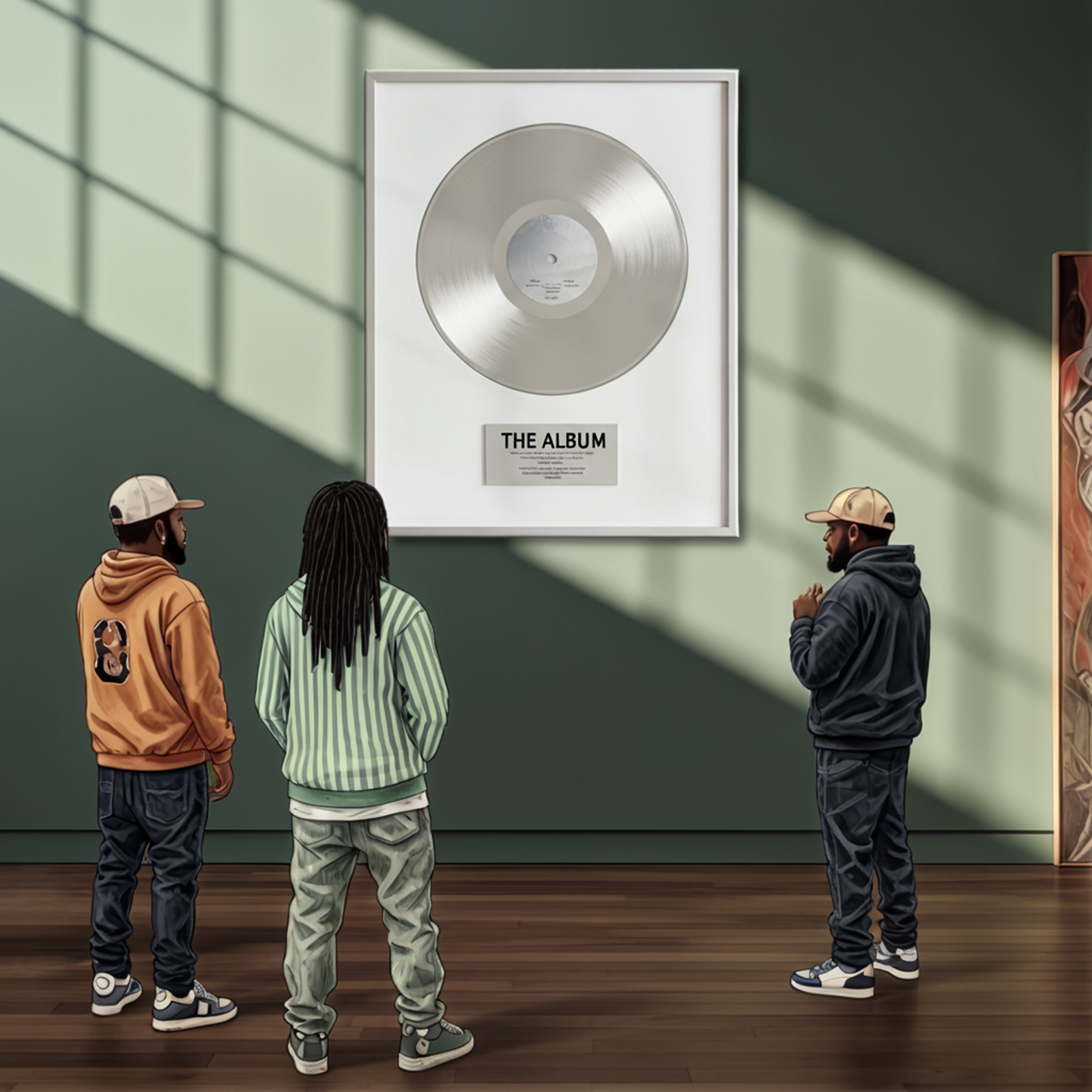
That possibility is what makes the story developing around Ceno the rapper so unusual. Ceno’s forthcoming The Album is scheduled for release November 6, 2026.
Before release, $420,750 has already been raised around the project through Imblem. But the money may be creating something less obvious.
A different kind of fan relationship.
Fans Have Always Been More Powerful Than Their Job Description The music industry tends to describe fans through what they consume. Streams.
Albums. Tickets. Merchandise. Subscriptions.
But consumption doesn’t fully explain what fans contribute.
Fans manufacture culture.
Consider how records actually become important. Somebody hears a song.
They send it to somebody else. That person uses it in a video. Another person quotes the lyrics. A DJ plays it.
A creator reacts to it. People argue about it.
The song develops a story.
Eventually the story becomes bigger than the marketing campaign. The audience didn’t simply purchase the culture.
The audience helped create the culture surrounding the product.
Yet economically, that same audience remains mostly outside the machinery. Ceno Is Testing the Boundary
Through Imblem, The Album has been associated with $30 Creative Units connected to royalty participation.
The project structure lists 30 percent of royalties for participating holders and 70 percent retained by the creator.
That changes the relationship.
A person isn’t necessarily only waiting to consume the finished product. They can become connected to the project before release.
That distinction may sound small. Psychologically, it isn’t.
Think About Sports
Why does somebody scream at a television when their favorite team scores? They didn’t score.
They’re sitting on a couch.
But psychologically, the language changes. “We won.”
Not:
“They won.” “We.”
Identity creates participation.
Music fandom already behaves similarly. “My artist.”
“Our era.”
“We got the number-one album.”
Fans speak as though they are part of the journey because emotionally they are.
Ceno’s experiment potentially adds an economic dimension to an emotional behavior that already exists.
We Rave You Asked the Right Question
The recent We Rave You article about Ceno approached the story by asking who actually gets to participate in the value of a hit record.
It’s difficult to answer without acknowledging the contradiction. Fans are indispensable to creating commercial value.
But they’re mostly customers of that value.
That arrangement made sense when participation required complicated contracts, accounting infrastructure and industry access.
Technology changes what’s administratively possible.
And when technology changes what’s possible, old categories tend to break. Customer, Backer, Supporter, Participant?
This is where language starts failing.
Is somebody holding a Creative Unit a fan? A supporter?
A participant?
Those words overlap without describing exactly the same relationship. That ambiguity is important.
It suggests Ceno and platforms like Imblem aren’t merely creating a different transaction. They may be creating a category the music business doesn’t have a comfortable name for
yet.
The same thing happened with “creator.”
Twenty years ago, somebody making videos online might have been called an amateur filmmaker.
Now “creator” describes an entire economy.
New behavior eventually creates new vocabulary. The Album Becomes an Ongoing Object
Traditionally, the fan’s relationship to an album is straightforward. Buy it.
Stream it. Enjoy it.
Maybe revisit it years later.
But participation changes the time horizon.
Now the person may care about what happens after release. How is the album performing?
Which song is connecting? Is the audience growing?
Are there licensing opportunities? Are people talking about it?
The album stops being only a collection of songs.
It becomes an ongoing story.
That Could Change Marketing Completely
Music-News.com recently explored why Ceno’s supporters may now have a new reason to help his upcoming album succeed.
Read Music-News.com’s feature about Ceno. The idea has a historical parallel.
Street teams.
Labels once assembled groups of people to put artists directly into communities. Posters.
Stickers. Flyers. Mixtapes.
Club promotion.
Those campaigns worked because human recommendation carries something advertising struggles to manufacture:
credibility.
Ceno may have stumbled onto a digital version with an important difference. The community can exist before the marketing campaign formally begins. Imagine Release Night
It’s November 6.
The Album goes live. Ceno posts the release.
Now compare two audiences.
Audience A sees the post because an algorithm happens to show it to them. They think:
“Oh, Ceno dropped.”
Audience B has been watching the project develop for months.
They know about the $420,750. They know the album is coming. Some participated around it.
Their reaction could be completely different:
“It’s finally here.”
Those four words contain something marketing agencies spend enormous money attempting to create.
Anticipation.
Anticipation Is an Asset
Think about the biggest entertainment franchises. Movies sell tickets months before release. Sneaker companies tease products.
Video-game studios build communities years before launch. Technology companies turn announcements into events.
Music does this too, but streaming culture has increasingly compressed release cycles. Songs appear quickly.
Albums surprise-drop.
Attention moves immediately to the next thing.
Ceno’s model may unintentionally push in the opposite direction. Participation encourages people to follow the journey.
That gives the album narrative before it gives them music. There Is a Dangerous Side Too
Deeper emotional and financial relationships require more responsibility, not less. Fans shouldn’t be encouraged to believe success is guaranteed.
Royalty participation does not guarantee meaningful royalty income. Artists should not treat supporters like an unpaid marketing department.
And financial participation should never become a test of whether someone is a “real fan.” Fandom shouldn’t require spending money.
Those distinctions matter.
The healthiest version of this model would preserve the voluntary nature of fandom while offering an additional form of participation for people who choose it.
The Music Still Decides Everything Ceno can create anticipation. Imblem can provide infrastructure. Supporters can participate.
Writers can debate whether the model is revolutionary. Then November 6 arrives.
And The Album has to be an album. Songs have to connect.
Hooks have to stick. Stories have to matter.
People outside the existing community have to discover Ceno and decide they want more. There is no technology shortcut around taste.
That’s actually what makes this experiment legitimate. The business model can get people close.
Only the art can keep them there. What Happens If It Works? Suppose the album connects. Suppose participants stream it. Suppose they tell friends.
Suppose those friends become listeners.
Suppose some of those listeners become supporters.
Now a loop begins:
Support → Creation → Release → Advocacy → Discovery → Consumption → Royalties → Continued Community
Traditional music companies perform many of those functions internally. Ceno’s experiment distributes some of them across a network.
That is potentially revolutionary. Not because fans replace labels.
Not because $30 replaces major financing.
Not because every artist suddenly becomes independent.
Because the boundary between audience and infrastructure begins getting blurry. Maybe “Fan” Was Always Too Small a Word
The music industry has spent decades trying to extract more value from fans. Sell another format.
Sell deluxe editions. Sell merchandise. Sell VIP access. Increase streaming.
Increase ticket prices.
Ceno’s experiment reverses the question. Instead of asking only:
How much value can an artist receive from the fan? It asks:
Can the relationship allow value to move in another direction too? That’s a fundamentally different starting point.
Nobody yet knows how important that distinction will become. The Album hasn’t even been released.
But Ceno may already have accomplished something unusual. He has made the word fan feel incomplete.
And if the model surrounding his project ultimately works, the music industry’s most important new category may not be another genre, platform or format.
It may be a new answer to the oldest question in popular music:
Who are the people on the other side of the song?