

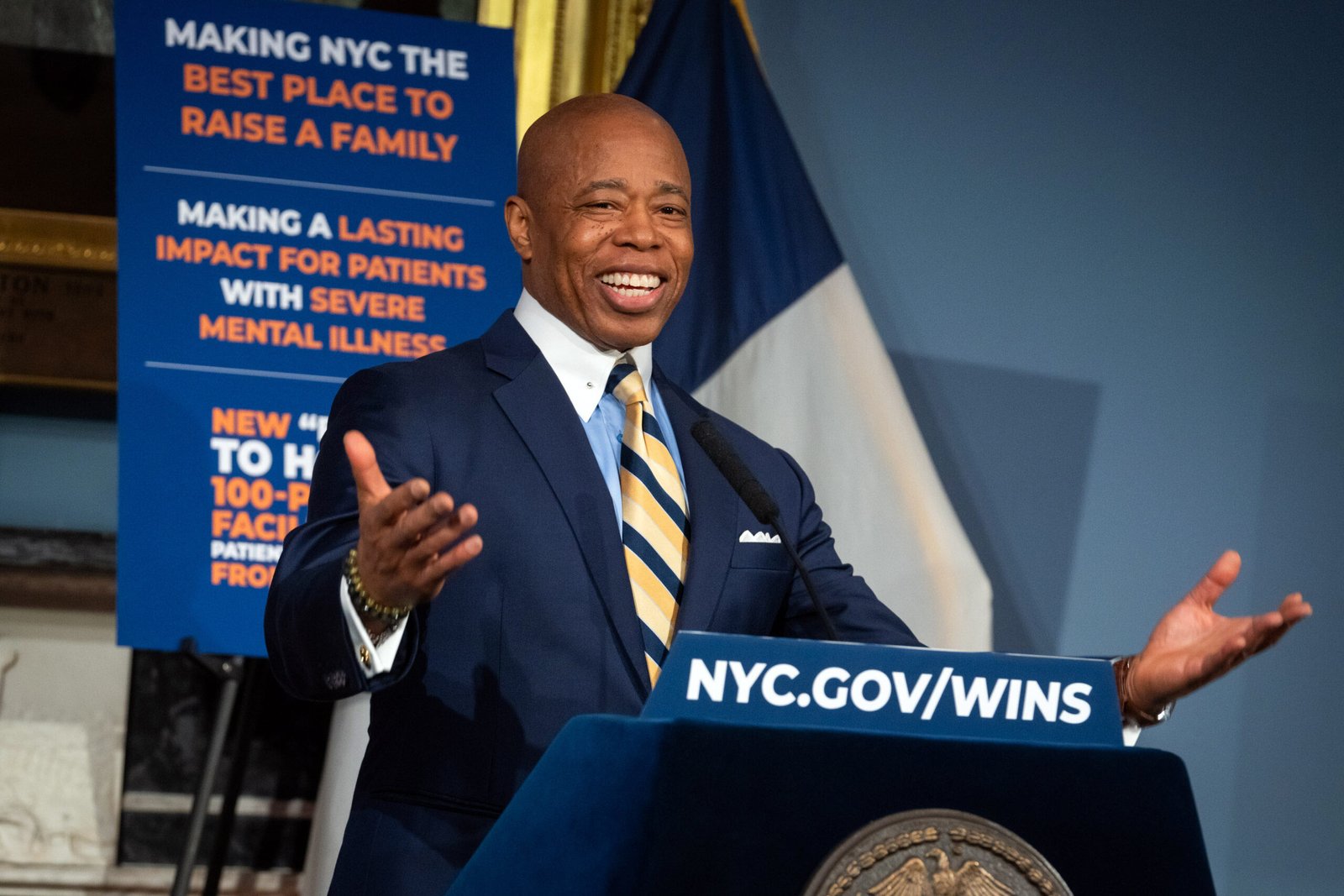
New York City Mayor Eric Adams recently sat down for a high-profile interview with conservative media figure Tucker Carlson, marking another notable moment in the mayor’s evolving political strategy. The appearance comes as Adams continues to position himself in a way that could resonate with President Donald Trump, who has previously suggested he might consider issuing a pardon to the mayor.
In a preview clip shared by Carlson on social media platform X, Adams directly addressed long-standing criticism about his political identity. “People often say, ‘you don’t sound like a Democrat, and you seem to have left the party,’” Adams remarked. He quickly pushed back on that narrative, adding, “No, the party left me, and it left working-class people.” The comment underscores Adams’ repeated effort to frame himself as a leader focused on everyday New Yorkers rather than strict party lines.
The full interview is set to air Tuesday evening at 6 p.m. on Carlson’s media network. Notably, City Hall did not actively publicize the appearance. The interview was absent from the mayor’s official daily schedule, and Adams’ communications team offered little promotion ahead of its release.
Kayla Mamelak Altus, a spokesperson for the mayor, explained that interviews airing exclusively on social media platforms are typically not included on the public calendar. This low-key approach suggests a careful balancing act: engaging with a conservative audience without drawing excessive attention from Democratic critics.
Still, the optics are hard to ignore. Eric Adams, a Democrat, participated in a Tuesday evening interview with Tucker Carlson, a figure closely associated with former President Trump and conservative politics. For Adams, the conversation appears to be part of a broader effort to recast himself as an independent-minded mayor willing to cross ideological boundaries—especially at a time when his political future may depend on relationships beyond his own party.
As the interview circulates online, it is likely to spark debate both within New York City and nationally, raising fresh questions about Adams’ political alignment, his messaging to working-class voters, and the long-term implications of his outreach to conservative media.