

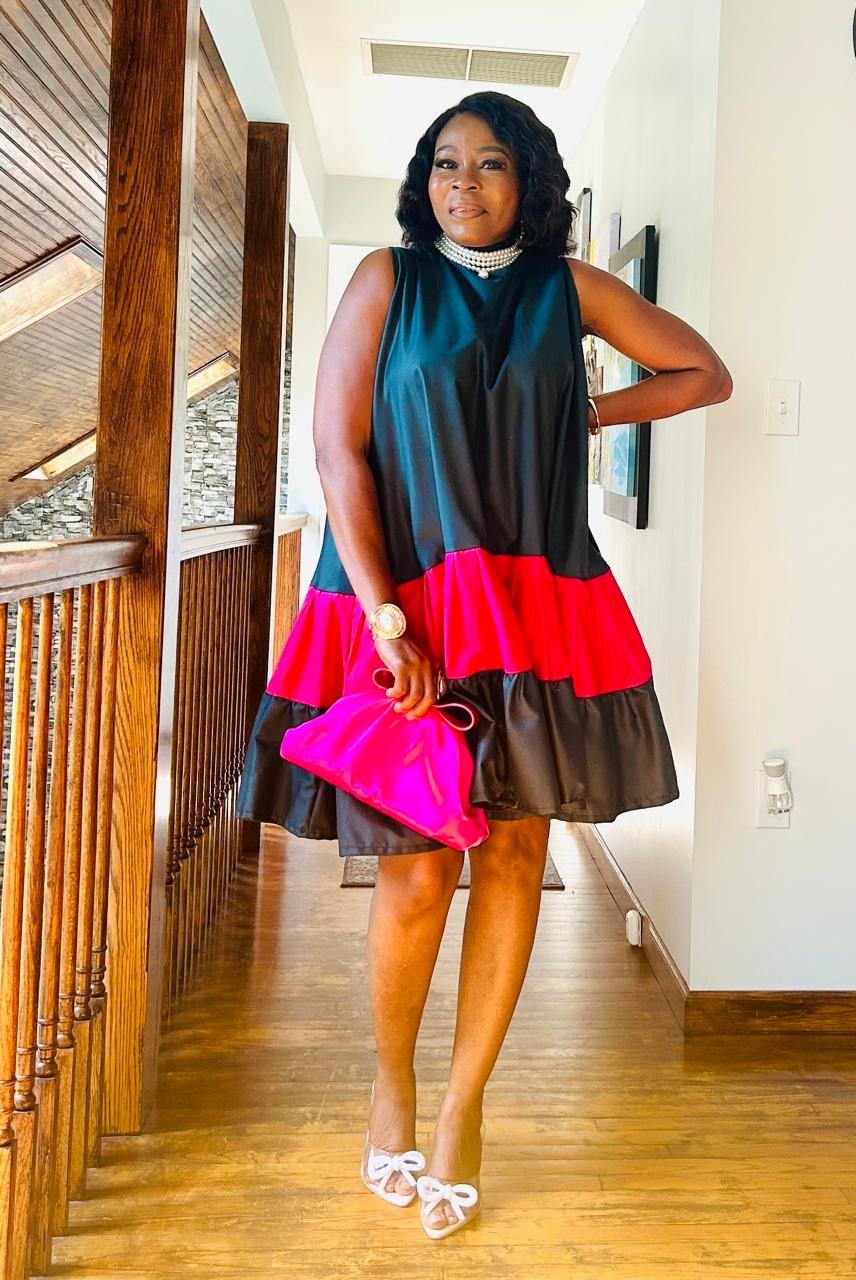
Trends decorate. Elegance edits.
Fashion, in its commercial form, is an invitation to acquire. A season arrives, a color is declared, a silhouette is circulated, and the woman who wishes to remain current is asked to respond. The response is almost always the same: add. Add the shoe. Add the trend. Add the proof that one has noticed. I have come to believe that elegance begins at the opposite gesture. It begins when a woman decides what does not belong.
This is not austerity, and it is not a moral argument against pleasure. It is a theory of style. Consumption treats the wardrobe as a record of what the market has offered. Curation treats it as a record of who one has decided to be. The first is responsive. The second is authored. A fashionable woman can be rebuilt every quarter. An elegant woman cannot, because her image has a memory.
Enough is not a lack. It is a decision.
The edited life starts in the closet and does not end there. A garment earns its place only if it strengthens a sentence already being written. If it requires a new personality to justify it, it is costume. If it asks to be explained, it is usually excess. The discipline is simple to state and difficult to keep: do not admit what cannot be repeated. A signature is not a single dress. It is the refusal, over years, to become unrecognizable to oneself.
Modern culture confuses option with freedom. The more one can buy, the more one is told one is choosing. In practice, abundance often produces the opposite. A crowded rail makes every morning a negotiation. A crowded life does the same. Elegance is the reduction of negotiation. When the coat, the color, the line, and the standard have already been chosen, presence is no longer spent on deciding who to be before noon.

This is why I distrust the language of reinvention. Reinvention is useful after a rupture. As a habit, it is restlessness dressed as growth. Style that changes in order to remain relevant is still answering someone else. The more demanding work is continuity: to become more precisely oneself, not newly someone else. Personal style is not a debut. It is a return, made cleaner each time.
Curation has a method. First, proportion. A piece that does not sit correctly on the body cannot be saved by desire. Second, repetition. If a color, a shoulder, a length cannot survive more than one season of one’s own life, it was never a principle. Third, removal. The elegant edit is rarely the addition of a better thing. It is the subtraction of a competing one. Two statements in one outfit produce noise. One statement, held, produces authority.
A wardrobe should remember the woman who wears it.
Consider the difference between a look and a line. A look can be borrowed. It can be assembled for a photograph and abandoned by evening. A line is harder. It is the through-note that makes Tuesday and a gala legible as the same person. Tailoring may change. Occasion may change. The grammar does not. When people say a woman has taste, they are usually noticing this continuity and mistaking it for instinct. Continuity is not instinct. It is editing, practiced until it no longer announces itself.
The same edit governs what is allowed into a day. Elegance that lives only in cloth is incomplete. Speech can be over-accessorized. A calendar can be over-accessorized. A social life can be crowded with pieces that photograph well and mean nothing. I apply the closet question elsewhere: does this strengthen the sentence, or does it merely fill the silence? Kindness is not the same as availability. Presence is not the same as attendance. To be fully in a room, one must have declined other rooms.
There is a social cost to this, and it should be named. Editing looks, to the unedited eye, like withholding. The woman who does not chase the week’s color is read as absent from the conversation. The woman who repeats a silhouette is read as limited. Neither reading is accurate. Repetition at this level is confidence. It says the choice has already survived scrutiny, including one’s own. Novelty asks to be noticed. A settled line asks to be understood.
History is full of women who understood this before the market learned to sell the opposite. The modern uniform — the precise jacket, the considered neckline, the refusal of ornament that does not work — was not a poverty of imagination. It was an economy of meaning. Chanel’s lasting contribution was not a single garment. It was the permission to stop proving. Proof is what excess is for. Elegance has already decided.
None of this requires a fortune. It requires a standard. Quality over quantity is often repeated until it becomes a slogan. The serious version is more specific. Buy fewer things that can be worn without apology in more than one life. Keep what still tells the truth. Release what was acquired to answer a comparison. Comparison is the most expensive stylist in the room, and she is rarely invited by name.

Trends decorate. Elegance edits.
To live this way is to accept a slower authorship. The image does not update on demand. It clarifies. Friends begin to recognize a woman before they recognize her clothes. That recognition is the real luxury. It cannot be purchased in a drop, and it cannot be lost in a season, because it was never dependent on either. It was built by refusal as much as by choice.
I am not arguing for a smaller life. I am arguing for a legible one. Consumption can fill a wardrobe and still leave a woman illegible to herself. Curation does the inverse. It removes until the remaining things agree. When they agree, style no longer needs to announce itself. It simply arrives with her — consistent, considered, and uninterested in being mistaken for the week.
Elegance, in the end, is an edited life made visible. Not the life with the most options. The life with the clearest ones. The woman who understands this does not ask what is new. She asks what still belongs. That question, asked often enough, becomes a style. Asked longer, it becomes a way of being seen.
Funmilayo Eyesan
Fashion Theorist